


State tax burdens depend on the tax category being measured. Income taxes, property taxes, sales taxes, and business taxes can lead to very different rankings.
Some states tax income heavily. Others have no broad personal income tax but collect revenue through property, sales, or business taxes.
So, which are the most taxed states, and which are the least taxed states?
State
Income Tax Rate
Avg. Combined Sales Tax
Effective Property Tax
Alabama
2% to 5%
9.46%
0.42%
Alaska
None
1.82%
1.22%
Arizona
2.5%
8.52%
0.66%
Arkansas
2% to 3.9%
9.46%
0.61%
California
1% to 13.3%
8.99%
0.74%
Colorado
4.4%
7.89%
0.55%
Connecticut
2% to 6.99%
6.35%
2.15%
Delaware
2.2% to 6.6%
0%
0.61%
District of Columbia
4% to 10.75%
6%
0.57%
Florida
None
6.98%
0.89%
Georgia
5.39%
7.49%
0.92%
Hawaii
1.4% to 11%
4.5%
0.29%
Idaho
5.695%
6.03%
0.67%
Illinois
4.95%
8.96%
2.23%
Indiana
3%
7%
0.85%
Iowa
3.8%
6.94%
1.57%
Kansas
5.2% to 5.58%
8.69%
1.41%
Kentucky
4%
6%
0.85%
Louisiana
3%
10.11%
0.56%
Maine
5.8% to 7.15%
5.5%
1.36%
Maryland
2% to 5.75%
6%
1.09%
Massachusetts
5% to 9%
6.25%
1.23%
Michigan
4.25%
6%
1.54%
Minnesota
5.35% to 9.85%
8.14%
1.11%
Mississippi
4.4%
7.06%
0.81%
Missouri
2% to 4.7%
8.44%
1.01%
Montana
4.7% to 5.9%
0%
0.83%
Nebraska
2.46% to 5.2%
6.98%
1.73%
Nevada
None
8.24%
0.59%
New Hampshire
None
0%
2.18%
New Jersey
1.4% to 10.75%
6.6%
2.47%
New Mexico
1.5% to 5.9%
7.67%
0.80%
New York
4% to 10.9%
8.54%
1.72%
North Carolina
4.25%
7%
0.82%
North Dakota
1.95% to 2.5%
7.09%
0.98%
Ohio
2.75% to 3.5%
7.29%
1.56%
Oklahoma
0.25% to 4.75%
9.06%
0.90%
Oregon
4.75% to 9.9%
0%
0.93%
Pennsylvania
3.07%
6.34%
1.49%
Rhode Island
3.75% to 5.99%
7%
1.63%
South Carolina
0% to 6.2%
7.49%
0.57%
South Dakota
None
6.11%
1.31%
Tennessee
None
9.61%
0.71%
Texas
None
8.2%
1.80%
Utah
4.55%
7.42%
0.63%
Vermont
3.35% to 8.75%
6.39%
1.90%
Virginia
2% to 5.75%
5.77%
0.82%
Washington
No wage income tax
9.51%
0.94%
West Virginia
2.22% to 4.82%
6.59%
0.59%
Wisconsin
3.5% to 7.65%
5.72%
1.76%
Wyoming
None
5.56%
0.61%
States With the Highest Income Taxes
Income taxes are often the first category people look at when comparing state taxes.
Paychecks, salaries, bonuses, and some investment earnings can all be affected by state income tax rules. Because of that, income tax rates can strongly shape how expensive a state feels for workers and high earners.
Several states have top marginal income tax rates that are much higher than the average. A top marginal rate does not apply to every dollar a person earns. Instead, it applies only to income above certain thresholds. As a result, not every resident pays the highest listed rate.
California is one of the highest-income-tax states. Its top listed rate is 12.3%, and income over $1 million can face an extra 1% tax. That brings California’s full 2025 income tax range to 1% to 13.3% for some high earners.
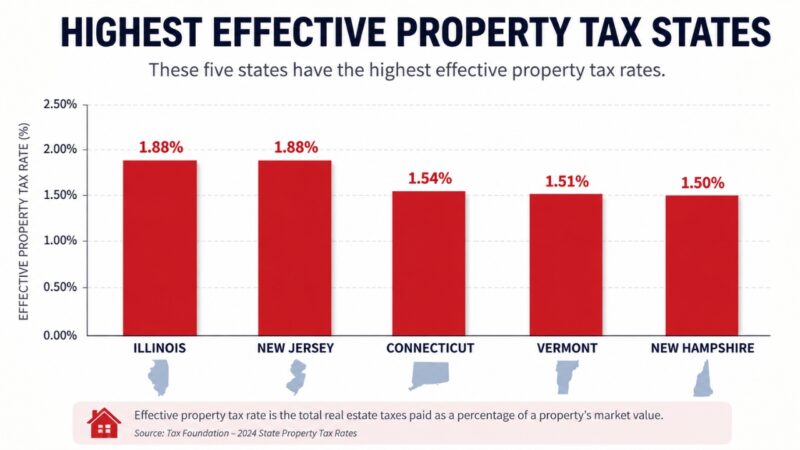
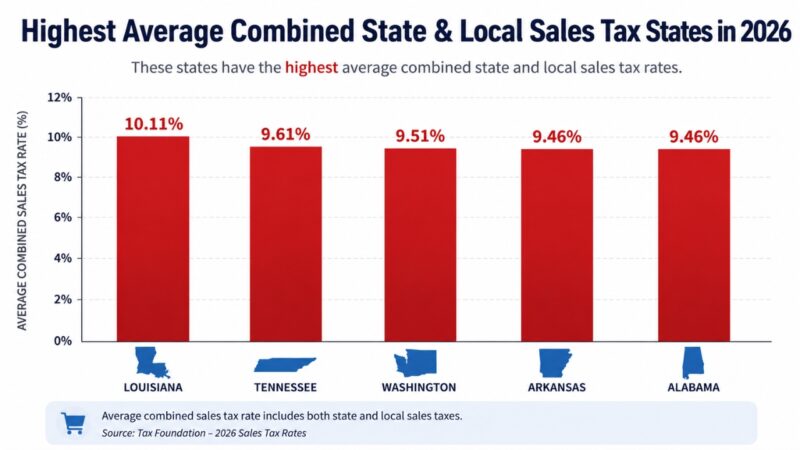
High rates in these states matter most for upper-income households. A taxpayer with income below the top bracket may pay a lower rate, while a taxpayer above the top threshold may face the highest rate on part of their income. Other high-rate areas include the District of Columbia at 10.75%, Minnesota at 9.85%, and Massachusetts at 5% plus a 4% surtax on taxable income over $1,053,750. Vermont has a top rate of 8.75%, while Wisconsin reaches 7.65%. Massachusetts is a clear example of how a flat base rate can still produce a higher burden for top earners. Its regular 5% rate applies broadly, but the additional 4% surtax raises the rate on taxable income above $1,053,750. That means high earners can face a much larger tax bill than lower-income residents. The highest listed income tax rates usually create the biggest impact for people with higher taxable income. Lower-income and middle-income residents may pay lower rates depending on income level, deductions, credits, and filing status. For that reason, top rates are useful for comparison, but they do not show the full tax cost for every household. Some states do not have a broad personal income tax. For wage earners, these states are often seen as more tax-friendly because paychecks are not reduced by state income tax. There are several states with no broad personal income tax. Workers in these states generally do not owe state income tax on wages, salaries, or regular employment income. New Hampshire became fully income-tax-free after its interest and dividends tax ended in January 2025. That change placed New Hampshire with the other states that do not tax broad personal income. Washington does not tax wage income, which can benefit workers who earn most of their money through salaries or hourly pay. However, Washington does tax capital gains income for high earners. Washington’s tax system has three important details for wage earners and high earners: States with no broad income tax often use other revenue sources. Sales taxes, property taxes, excise taxes, tourism-related taxes, and business taxes can still create major costs for residents and companies. A no-income-tax state can be especially attractive for people who earn high wages. Still, total tax cost depends on spending habits, homeownership, property values, local tax rates, and business activity. Someone who rents and saves heavily may experience a no-income-tax state differently than someone who owns a high-value home or spends heavily on taxable purchases. No income tax does not always mean low taxes overall. Some states offset lower income taxes with higher property taxes, higher sales taxes, or heavier business taxes. Because each tax affects a different part of life, rankings can change depending on what is being measured. Texas is a clear example. Texas has no state income tax, but its effective property tax rate is listed at 1.40%. That places it seventh-highest among states in a 2024 property-tax ranking. Property taxes can make a major difference for homeowners. The highest effective property tax states include: Lowest effective property tax states show a much different cost profile: Property tax rates matter because they apply year after year. A lower rate can reduce long-term housing costs, while a higher rate can raise the cost of owning a home even in a state with no income tax. Sales taxes also change the total tax picture. In 2026, the highest average combined state and local sales tax states include: Sales tax costs can matter most for households that spend a larger share of income on taxable goods. High sales tax rates can raise the cost of clothing, household supplies, electronics, furniture, and other everyday purchases. A state with no income tax may still collect more money through purchases. A state with low property taxes may rely more on income taxes or sales taxes. Overall tax competitiveness looks at the structure of a state’s tax system, not only how much residents pay. It includes corporate taxes, individual income taxes, sales taxes, property taxes, and unemployment insurance taxes. In the 2026 State Tax Competitiveness Index, top-ranked states share stronger positions in the overall index: Several top-ranked states have no broad personal income tax, which can improve their position in the index. Simple tax structures, lower burdens on investment, and fewer complex tax rules can also help a state rank higher. Wyoming ranks first because its tax structure is highly competitive across major categories. South Dakota ranks second and also benefits because it has no broad personal income tax. New Hampshire ranks third after becoming fully income-tax-free in January 2025. Alaska ranks fourth, while Florida ranks fifth. The least tax-competitive areas include New York at #50, New Jersey at #49, California at #48, the District of Columbia at #48, and Connecticut at #47. A low ranking does not always mean every resident pays the most. It means the state’s tax structure is less competitive when major tax categories are measured together. High income tax rates, complex tax rules, heavier business taxes, and property tax burdens can all affect the ranking. Comparing the most and least taxed states requires looking at the full tax picture, not income tax alone. Income taxes matter most for wages and high earners. Property taxes matter most for homeowners. Sales taxes affect everyday purchases. Business taxes shape costs for employers and companies. A state with no income tax can still have high costs in other tax categories. A state with high income taxes may have lower costs elsewhere. Fair comparisons should include every major tax type before calling any state the most or least taxed.
States With No Income Tax
Other Taxes to Consider
Best and Worst Overall Tax Climates

Summary